The Making of Human Milk: Law and History of Milk Banks in France (2026)
At the crossroads of history, law, and gender studies, this book engages with contemporary debates on reproductive health, care, and the role of the maternal body in public policy. It examines a still largely understudied object in the social sciences in France: human milk as it circulates outside the body.
What becomes of this fluid once it is expressed, stored, and distributed through technical and institutional arrangements? How has a substance so often regarded as intimate progressively been claimed by medicine and law? From its collection from wet nurses to the establishment of milk banks, the book traces this transformation from the 1880s to the present day. It shows how the production of human milk shifted from paid labor to a practice now presented as exclusively altruistic, regulated by health law and bioethics.
Drawing on a wide range of sources—archives, legal texts, interviews, and observations—this book brings to light long-overlooked issues surrounding reproductive work, motherhood, and breastfeeding understood as a form of collective care. It is intended for historians, legal scholars, and sociologists, as well as for anyone interested in the relationships between gender, health, and institutions.
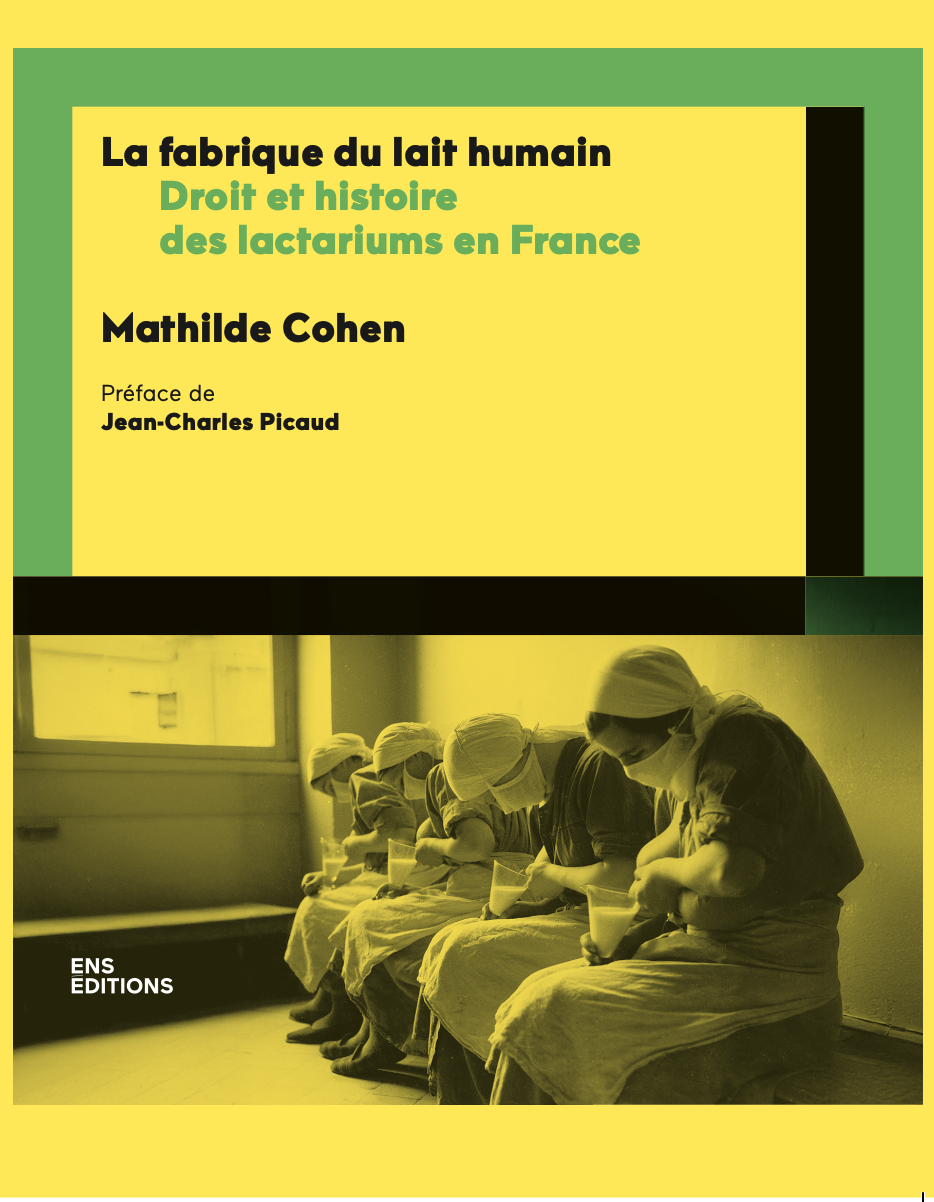
La fabrique du lait humain. Droit et histoire des lactariums en France, ENS Éditions, 2026
Situé à la croisée de l’histoire, du droit et des études de genre, cet ouvrage s’inscrit dans les débats contemporains sur la santé reproductive, le care et la place du corps maternel dans les politiques publiques. Il interroge un objet encore peu étudié : le lait humain, lorsqu’il circule hors des corps.
Que devient ce fluide une fois exprimé, conservé et distribué au moyen de dispositifs techniques et institutionnels ? Comment, alors même qu’il est souvent présenté comme intime, a-t-il été progressivement investi par le droit et la médecine ? De sa collecte auprès de nourrices à la création des lactariums, l’ouvrage retrace, des années 1880 à nos jours, les étapes de cette transformation. Il montre comment la production de lait est passée d’un travail rémunéré à un geste désormais présenté comme exclusivement altruiste, réglementé par le droit de la santé et de la bioéthique.
S’appuyant sur un vaste corpus de sources – archives, textes juridiques, entretiens et observations de terrain, ce livre met en lumière des enjeux longtemps restés dans l’ombre autour du travail de reproduction, de la maternité et de l’allaitement envisagé comme une forme de care collectif. Il s’adresse aux historien·nes, juristes et sociologues, mais aussi à toutes celles et ceux qui s’intéressent aux relations entre genre, santé et institutions.
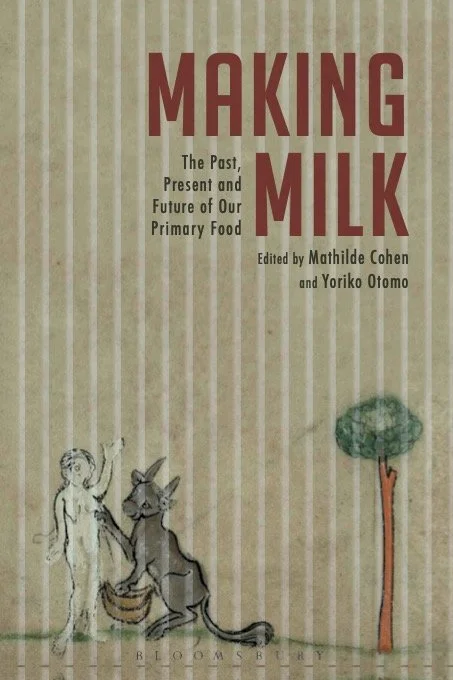
Making Milk. The Past, Present and Future of Our Primary Food, London, Bloomsbury, 2017 (co-edited with Yoriko Otomo)
What is milk? Who is it for, and what work does it do? This collection of articles bring together an exciting group of the world's leading scholars from different disciplines to provide commentaries on multiple facets of the production, consumption, understanding and impact of milk on society. The book frames the emerging global discussion around philosophical and critical theoretical engagements with milk. In so , various chapters bring into consideration an awareness of animals, an aspect which has not yet been incorporated in these debates within these disciplines so far.
This volume includes writing from an array of perspectives, including jurisprudence, food law, history, geography, art theory, and gender studies. It will be of use to professionals and researchers in such disciplines as anthropology, visual culture, cultural studies, development studies, food studies, environment studies, critical animal studies, and gender studies.